Story by Denise Keller, Editor
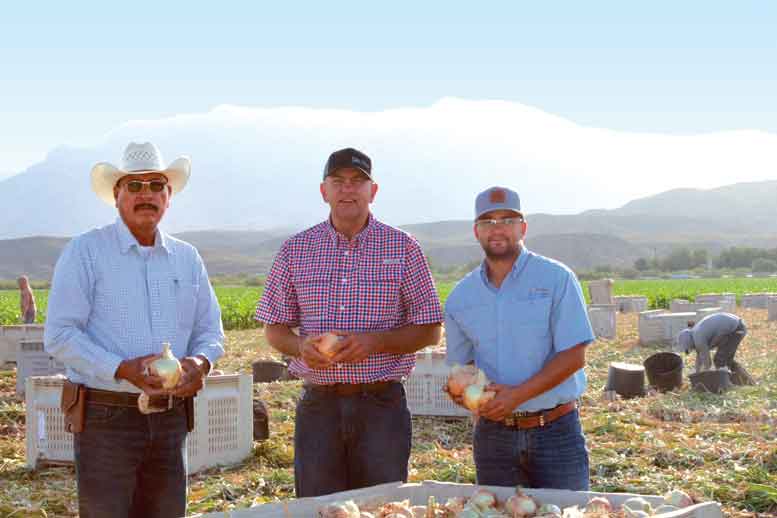
When it comes to growing onions in New Mexico, weather is a double-edged sword. Dale Gillis knows this as well as anyone. He’s been a farmer all his life, and his family has been growing onions in the area since 1918.
Today, Gillis Farms, which markets onions under the name Desert Springs Produce, farms 4,500 acres in a 60-mile radius around Arrey, New Mexico, at the north end of the Hatch Valley. Through the years, the family has grown a variety of crops including cabbage, lettuce, broccoli and squash.
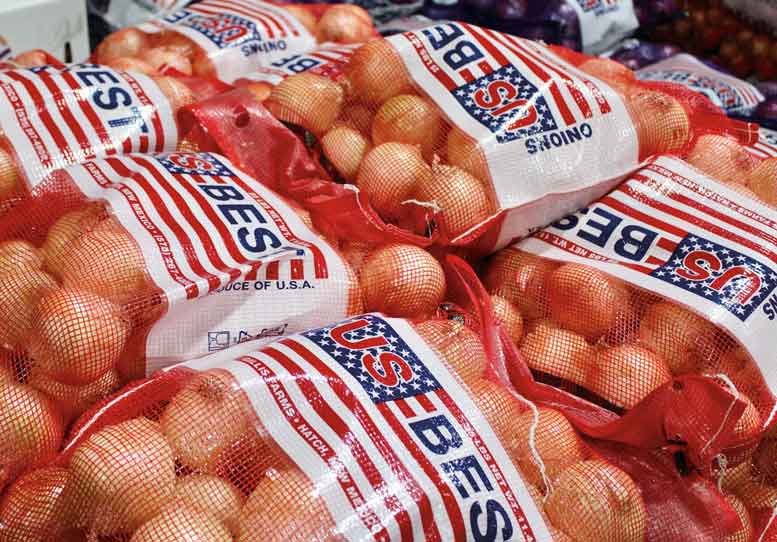
The current rotation consists of onions, chili, alfalfa, and silage corn. Onions, the farm’s main crop, account for 1,000 acres, with about 60% planted in yellow onions and the remainder equally split between reds and whites.
Weather Conditions
Gillis Farms has onions in the ground almost the entire year, with the only break in the growing season from mid-August to mid-September. Gillis plants spring-seeded varieties in late January and harvests those from early July through mid-August. In mid-September, the fall crop is planted, which comes out of the field beginning in mid-May. Another 70 acres of onions are transplanted in early February to be harvested in early July.
Hot days coupled with cool nights year-round allow for this extended growing season. But it also means the crop is at the mercy of Mother Nature 11 months of the year.
“When it gets to 105 or 107 degrees, you can water these fields, and then in three or four days, they’re dry because you get that heat and the wind blows 30 or 40 miles per hour. It’s a challenge just keeping them wet and growing,” Gillis says.
Early-season winds can sandblast emerging onions, summer hail and rainstorms can damage the crop, and hot days can cause sunscald. Temperatures commonly reach that 105 to 107 degree range, and if the plants don’t have a good top, the onions – especially the reds and whites – will scald. To protect the crop, Gillis started planting onions in wider beds. This produces more of a canopy, creating more shade for bulbs. As an added benefit, the change also increased yield.
Water Supply
Dry weather has not been helping New Mexico farmers deal with ongoing drought conditions. Gillis says he has been short on water out of the Rio Grande River for the last five years.
“Our normal is 2 acre feet, and we’re down to 4 inches because we’re going through a really bad drought. Our water situation is really, really getting pretty serious here,” Gillis says. “Water shortages are a top concern for just about everyone in the Western U.S. right now. The drought is the real deal.”
Some farmers in the area are choosing to forgo growing cotton and other rotation crops in order to have enough water for their onion crops. Gillis is using mostly well water to make up for the lack of water from the Rio Grande. The well water contains more salt than the river water. With salinity at the soil surface, poorly timed rain can splash salt onto small onions and kill the plants. Gillis has found acid products to be most beneficial in lowering pH levels in the water.
“In reality, there’s only so much you can do about it,” the grower says.
To improve water use efficiency, Gillis replaced flood irrigation with drip irrigation in 90-95% of his onions a few years ago, which has been a substantial help. And it doesn’t hurt to pray for snow in southern Colorado, he says. Runoff from snowpack in southern Colorado provides irrigation for growers in New Mexico, and there’s been little snow in the last four of five years, Gillis says.
“If things don’t change, the water challenge is probably going to be the biggest challenge in the future. But that can all change pretty quick. The man above has a way of changing things. You never know,” he says. “If you don’t have faith, you probably shouldn’t be a farmer.”
Worker Shortage
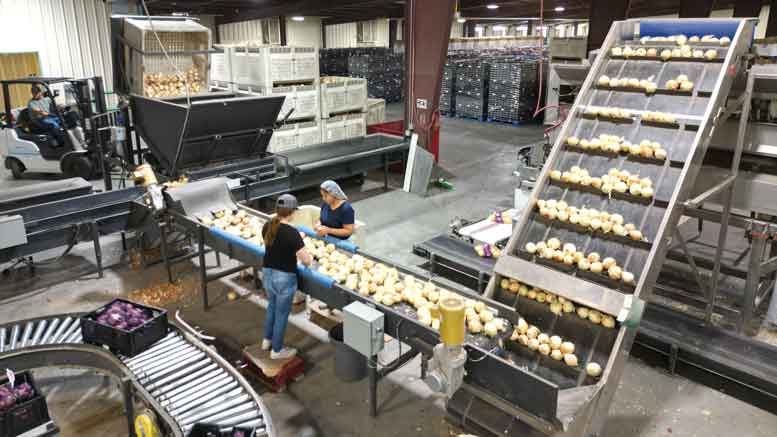
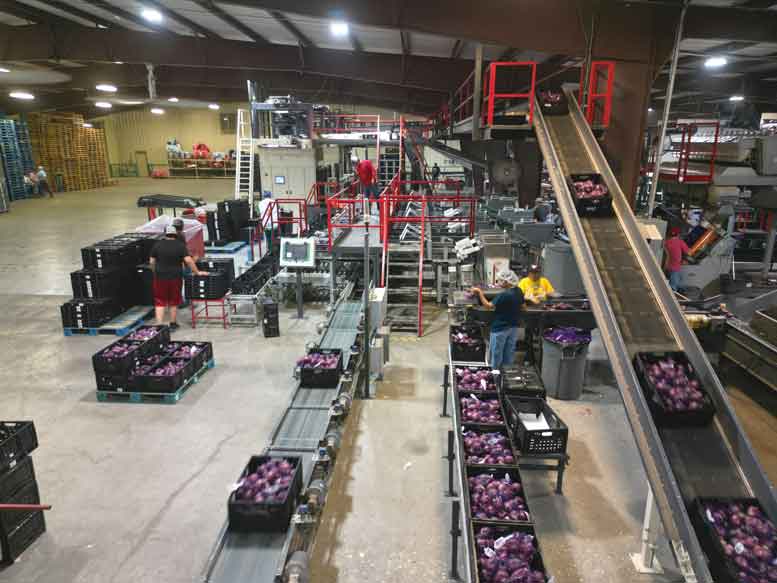
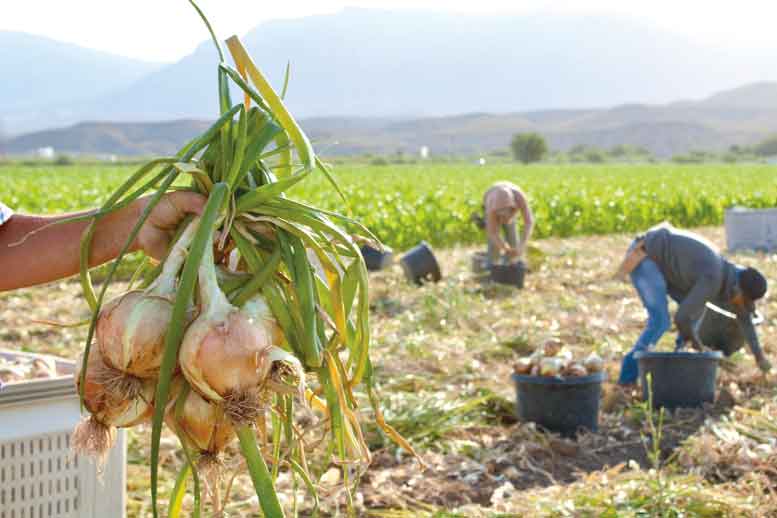
In addition to a water shortage, New Mexico farmers – like those in most regions of the country – are experiencing a shortage of local labor, as well. At Gillis Farms, onions are transplanted, weeded and harvested by hand. This requires 40 to 50 full-time workers and 160 employees in the fields at harvest, with another 130 working in the onion shed. Gillis has been utilizing the H-2A guest worker program for the last five years.
To reduce labor expenses, the grower purchased an Ecorobotix sprayer in April. Spraying herbicides three times this spring and summer helped him reduce hand weeding by 60% and also decrease herbicide damage to onions. He says further increasing efficiency with a mechanical harvester might be impractical for his farm given that Desert Springs Produce sells mostly to retail and has no storage sheds.
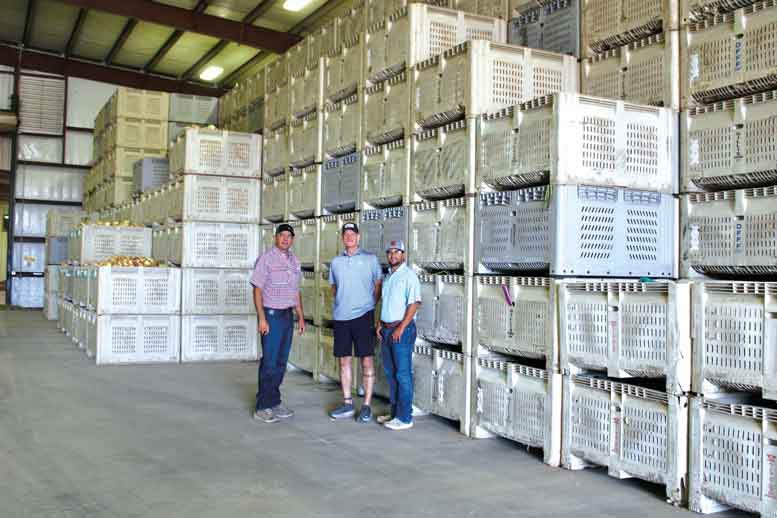
“In the Pacific Northwest, growers just go to a different barn to fill an order. Our barns are the fields,” Gillis says, explaining that crews need to be able to harvest onions to fill orders, regardless of weather or field conditions. “Since we only have three days storage capability, we’re limited on what we can do.”
That said, he hasn’t ruled out the possibility of mechanically harvesting a portion of his onion acreage someday.
“I go to the Northwest, and I just drool when I see how they do it,” Gillis says.
In the packing shed, Gillis has added palletizers and automatic fillers. He would like to further streamline operations with electronic sizers and graders.
Way of Life
Despite the challenges, Gillis, a fourth-generation onion grower, loves his work. In fact, the challenge of farming is what he enjoys most.
“It gets in your blood and you learn to love it, and that’s the only thing we know. That’s all we’ve done all our lives is work,” Gillis says. “About a week before I’m done with onions, I am beat down to nothing. But a month prior to starting, I’m ready to go. There’s just something about the harvest.”
His family members’ involvement in the farm also motivates him to keep putting in the work. His son, Brandon, farms alongside him. Gillis’ wife, Priscilla, and their daughter, Savannah Gillis-Turner, handle food safety. His brother co-owns the farm and manages the chili crop, and their mom still checks in on things at age 90 – perhaps proving that farming does, in fact, get in your blood.