
These onions have been damaged by acarid bulb mites (Rhizoglyphus species) (Fig. 3). The mites are small, pearl shaped and cream colored. They can be seen with the naked eye (small, white spots on bulbs). The mites usually survive in decaying plant debris in the field. Thus, fields with high organic matter may have higher mite populations.
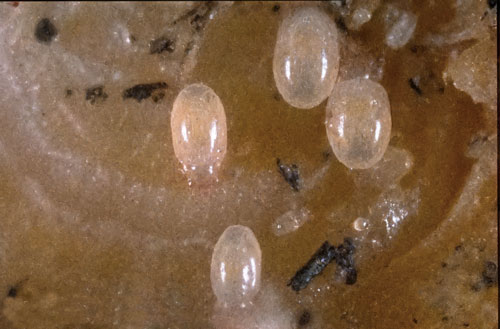
Photo by Jack Kelly Clark, UC IP
While feeding on the outer layers of the bulb (Fig. 1), the mites cause direct feeding damage. In addition, the feeding creates wounds that are entrance points for fungal and bacterial bulb rot pathogens that result in rot starting at the base of the onion (Fig. 2). In direct-seeded onion fields, the mites can sever the radicle before the onion seedling gets established, resulting in stand loss. Symptoms of feeding damage in the field are similar to feeding by seedcorn maggots.
In storage, the mites can move from bulb to bulb if no cold storage is available.
In addition to onion, the mites can infest other bulb and tuber crops, including garlic and some cut flowers like tulips or freesia.
There are few management options for bulb mites. Good cultural practices that allow for good growth after cool, wet conditions in the spring allow onions to grow out of injuries caused by bulb mites. There are no effective acaricides.