
Story by Denise Keller, Editor
Photos by Denise Keller and Casey Crookham
The only common complaint heard at the National Onion Association’s 2025 Annual Convention – held Dec. 1-5 in Lihue, Hawaii – was that it was difficult to be in meetings with so much sun, sand and surf to enjoy outside.
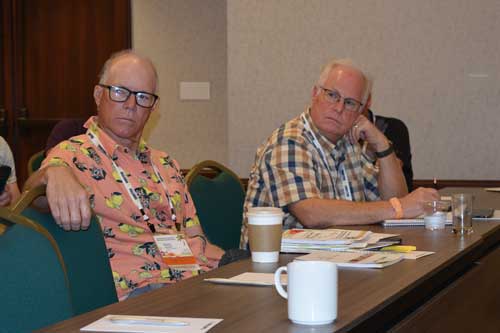
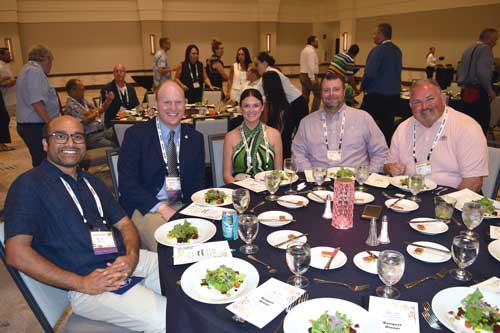
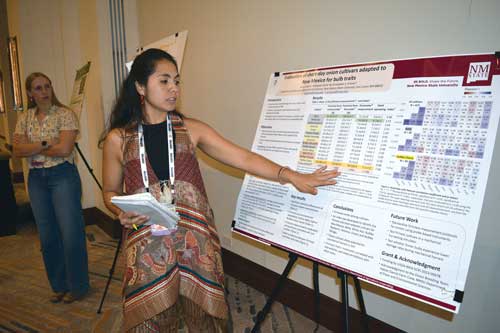
As they do every other winter, the National Onion Association (NOA) and National Allium Research Conference (NARC) teamed up to host a meeting together. This brought 232 people to the island of Kauai for five days of meetings, presentations, networking and a tour of the island’s agriculture industry.
-AMAZONPOLLY-ONLYWORDS-START-

-AMAZONPOLLY-ONLYWORDS-END-
General Session
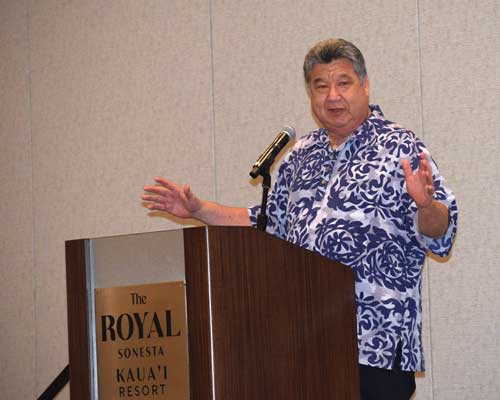
Hawaii Senate President Ronald Kouchi welcomed the group to Kauai during the general session, thanking attendees for visiting during the tourism industry’s off-season. He also mentioned that he had been learning about onion production in preparation for his talk and was impressed with the work being done in the industry.
“It shows you the stereotypical image of who the American farmer is,” Kouchi said. “He’s somebody who’s pretty damn smart, somebody who’s up to speed on technology, and somebody who’s maximizing the property that they have and how they’re growing to get the best yield with incredible taste.”
-AMAZONPOLLY-ONLYWORDS-START-

-AMAZONPOLLY-ONLYWORDS-END-
Session attendees heard a more somber report from John Harris, president of Paradigm Fresh, who was tasked with giving an update on the onion market.
“I’ve been on the sales desk for 22 years,” Harris said. ”I have not ever seen a market quite like this one before. I feel like sometimes it’s better to be realistic than optimistic. I would love to stand up here and say there are some things to be optimistic about. I’m not too sure.”
-AMAZONPOLLY-ONLYWORDS-START-

-AMAZONPOLLY-ONLYWORDS-END-
Prefacing his talk with a disclaimer that his statements are not fact, but rather his opinion based on conversations and observations, Harris said the size profile of the 2025 crop is larger with fewer mediums than usual. That could be something to be optimistic about in coming months.
Quality has been inconsistent compared to other years, particularly in red onions. However, Harris is optimistic that the red onion market could improve by several dollars later in the spring. The white onion market is hanging in there, and yellows, which make up the bulk of the crop, are not fantastic, he said.
-AMAZONPOLLY-ONLYWORDS-START-
-AMAZONPOLLY-ONLYWORDS-END-
Noting that the onion market is becoming increasingly global, he said Canada is bringing onions into the U.S., and with market conditions what they are, Mexico will follow. He has heard that the cartels in Mexico have been holding back produce from crossing the border, but he doesn’t know if that will continue in the coming months.
“Despite the tough conditions, our growers are resilient and hanging tough and keeping track of storages. We’re moving as efficiently as we can, and we’ll get through this season. As these markets are, they always do rebalance themselves. To rebalance that, as we go ahead in the next several years, planning ahead for the product that goes in the ground and contracting with our retailers and processors and all the planning that can be done so that the open market isn’t completely in charge of what’s going into growers’ pockets is going to be really important,” Harris said. “Let’s go into the spring and hopefully this thing will get a little better.”
-AMAZONPOLLY-ONLYWORDS-START-
-AMAZONPOLLY-ONLYWORDS-END-
Ag Tour
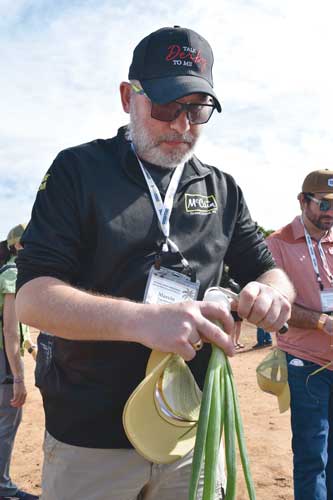
The convention’s ag tour took the group to Aloun Farms, one of Hawaii’s larger producers of sweet onions. Aloun Farms president and farm manager Alec Sou’s family has been farming in Hawaii since 1977 and growing sweet onions for 27 years. The farm produces about 20 crops on 2,000 acres of Kauai and Oahu and recently acquired another 1,600 acres.
-AMAZONPOLLY-ONLYWORDS-START-
-AMAZONPOLLY-ONLYWORDS-END-
As much of Oahu’s former agricultural land is being urbanized, Aloun Farms has shifted all but 600 acres of its production to Kauai. Over the years, onions have accounted for 180-400 acres of the farm’s annual production. With better land availability on Kauai, the farm can grow more and will work back toward the higher end of that range, Sou said.
-AMAZONPOLLY-ONLYWORDS-START-


-AMAZONPOLLY-ONLYWORDS-END-
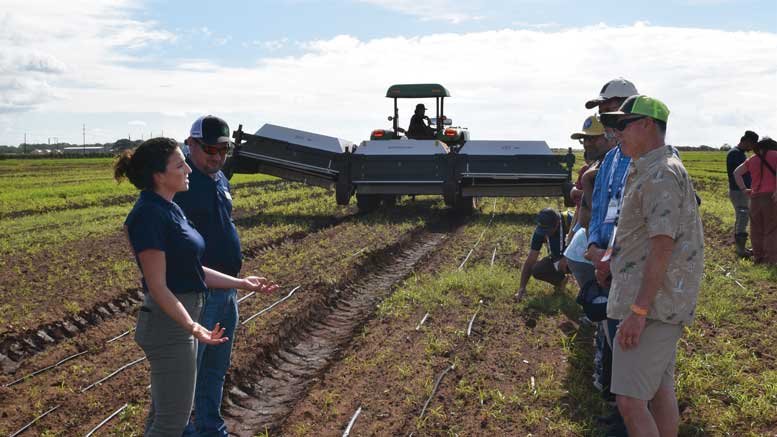
Ecorobotix brought its ARA field sprayer to Aloun Farms to demonstrate for ag tour guests. The machine has three modules, each containing a 3-D camera and a color camera that can take 30 pictures per second as the machine travels at up to 4.5 miles per hour across the field. The machine’s algorithm uses the images to determine which of the sprayer’s 156 nozzles to fire depending on the target selected. It can spray crop protectants or fertilizer on onion plants, for example, or herbicides on weeds and can detect weeds less than 1/10 of an inch tall.
The tour also included stops at Kauai Shrimp and Kauai Coffee Company.
-AMAZONPOLLY-ONLYWORDS-START-



-AMAZONPOLLY-ONLYWORDS-END-
Looking Ahead
NOA members used their time together to set priorities for their talks with lawmakers in Washington, D.C., during the NOA’s annual lobbying trip in March. North Dakota onion grower Barry Vculek reported that the NOA’s legislative committee feels the Trump Administration is more business-friendly, and therefore the NOA might be able to make some headway on issues such as making the H-2A program more friendly to employers and securing an increase in IR-4 funding. The NOA also continues to advocate for renegotiating the United States-Mexico-Canada Agreement and imposing a duty on Mexican onions crossing the border.
The convention marked the end of Jared Gutierrez’s two-year term as NOA president. Reflecting on the experience, he noted that the collaboration, camaraderie and support in the organization was appreciated as he served to continue the work of past NOA presidents.
-AMAZONPOLLY-ONLYWORDS-START-
-AMAZONPOLLY-ONLYWORDS-END-
“We have fought hard and we will continue that. Sometimes we feel like we came out a little beat up, but we keep continuing the drive because that’s who we are. We don’t give up. That’s who the American farmer is. We don’t give up,” Gutierrez said before passing the reins to incoming president Barry Vculek.
“I see great opportunities in our association,” Vculek said. “I fully intend to follow in Jared’s footsteps. I think we’re moving in the right direction in a lot of areas.”
Colby Cantwell from Colorado moves up to serve as 1st vice president, and Kimi Maag from Oregon is the new 2nd vice president.
The NOA will hold its summer convention July 8-11 in New York City.
-AMAZONPOLLY-ONLYWORDS-START-

-AMAZONPOLLY-ONLYWORDS-END-