By Jeremiah Dung, Oregon State University
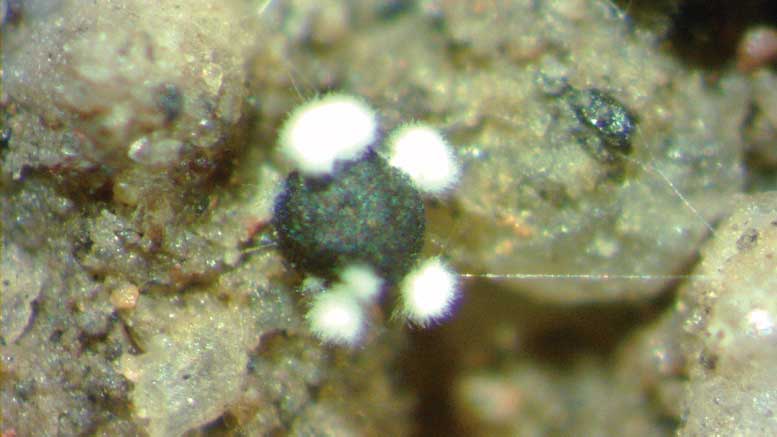
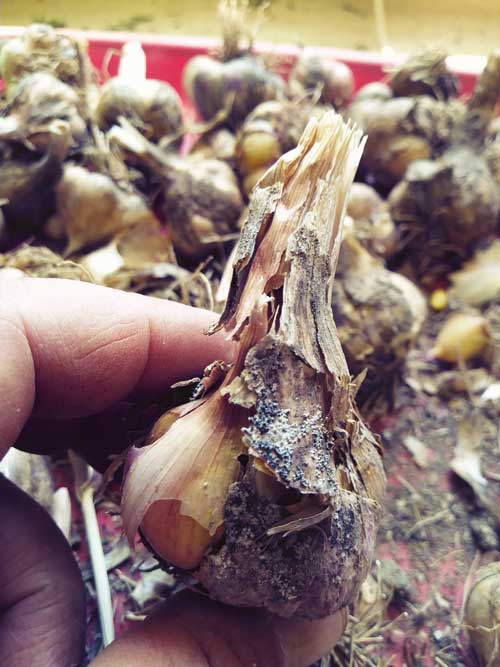
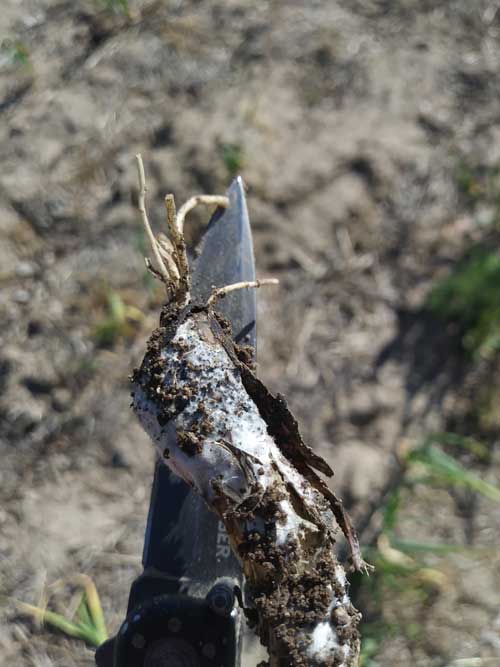
One of the most damaging and persistent diseases on onion and garlic in the western United States is white rot, caused by the fungus Sclerotium cepivorum. It is by far the most serious and economically important soilborne pathogen of immediate concern for onion and garlic producers in California and garlic grown for seed in Oregon. It can also impact Allium production areas of the Northeast and the Great Lakes region and has been reported on overwintered crops in Louisiana. Other economically important Alliums, including leek, shallot, chives and ornamental Allium, are also susceptible to white rot. The fungus infects the root systems, basal plates and bulbs of Alliums, resulting in foliar symptoms that include chlorosis and premature death of older leaves, stunting and rapid death of the aboveground foliage. Infected bulbs become watery and decay, eventually displaying white, fluffy mycelia and small, poppy seed-sized sclerotia of the fungus.
-AMAZONPOLLY-ONLYWORDS-START-
-AMAZONPOLLY-ONLYWORDS-END-
Management Options
White rot is limited to Allium species because sclerotia germinate in response to sulfur compounds released from Allium roots. One management approach is to apply these volatile sulfur compounds to soils in the absence of an Allium host, resulting in sclerotia germination and death. Diallyl disulfide (DADS), a primary compound found in the rhizosphere soil of garlic plants, has been shown to reduce sclerotia populations in laboratory, greenhouse and field studies, and DADS was previously registered as a germination stimulant for white rot management. The product was typically shank-injected into soils six to 12 months prior to planting an Allium crop.
Although soil treatment with DADS could reduce sclerotia populations by over 90%, it had several drawbacks. First, the product itself was costly to use at the labeled rate of 1 gallon/acre (approximately $100/acre at the time). Second, for maximum efficacy, it required shank injection into the soil, which increases the cost and accessibility of applications. Lastly, DADS is highly volatile and an eye, oral, dermal and respiratory irritant, so it required handlers and applicators to wear protective personal equipment, including respirators. While DADS and commercially labeled products were very effective, sources of DADS are not readily available and registered products are no longer on the market.
Natural sources of sclerotia germination stimulants, including garlic and onion oil, powder, and Allium waste and effluent have been investigated as potential replacements for DADS and can be effective at reducing white rot sclerotia populations. Allium waste and effluent can be effective, but are usually less so than Allium powders and oils. Garlic and onion powder can also be effective, but large quantities are usually required and the amount of DADS in powders can vary depending on source, age and storage conditions, which can influence their efficacy. Allium oils are often highly effective but are often also shank injected due to their volatility and low solubility in water, which restricts spray or chemigation applications.
-AMAZONPOLLY-ONLYWORDS-START-
-AMAZONPOLLY-ONLYWORDS-END-
Encapsulated Germination Stimulants
Encapsulation is a technique that can be used in situations where compounds need to be protected from the environment before or after delivery or need to be released in a slow-release manner, including essential oils for use as biopesticides. Previous research funded by a USDA-NIFA SCRI project (grant no. 2018-51181-28435) and conducted in collaboration with Michael Qian at Oregon State University demonstrated that both liquid DADS and garlic oil could be successfully encapsulated by β-cyclodextrin.
Encapsulation of DADS or garlic oil with β-cyclodextrin resulted in microcapsules with less odor, lower volatility and the recovery of over 90% of the initial stimulant. Compared to their liquid counterparts, encapsulated DADS and garlic oil was easier to handle and, through the course of our studies, it was observed that encapsulated DADS and garlic oil were much more soluble in water than liquid DADS and garlic oil, potentially allowing for spray or chemigation applications in agricultural settings.
In lab and growth chamber experiments, encapsulated germination stimulants significantly reduced sclerotia levels in naturally infested field soils. Depending on the rate applied, soils treated with dry formulations of encapsulated DADS or garlic oil resulted in sclerotia populations that were 63.1 to 82.3% less compared to the non-treated control, comparable to liquid DADS (70.9 to 79.7%). Similarly, liquid suspensions of encapsulated germination stimulants reduced sclerotia populations by 75.9 to 92.7%. Additionally, microplot trials under field conditions also resulted in significant reductions in sclerotia levels compared to non-treated plots.
Encapsulated DADS and garlic oil provide flexibility in application practices (dry broadcast, spray, chemigation) and eliminates the need for shank-injection application, which can be costly and difficult to perform due to the specialized equipment required. It is also less volatile than liquid formulations, resulting in easier handling and transport with less impact on human health and the environment during transport, handling and application activities. However, future research at field and farm scales is needed to evaluate their effectiveness and economic impacts in the long-term.