
By Sabrina Fisher, Director of Marketing & Communications, Texas International Produce Association
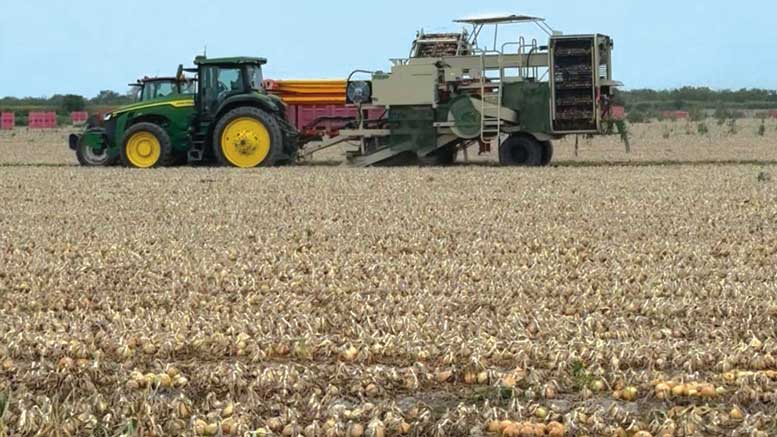
With support from the Texas Department of Agriculture, Texas growers and partners are stepping through a practical, Texas‑built approach to mechanical onion harvesting – keeping quality front and center while reducing harvest risk.
The Challenge We’re Tackling
Every Texas onion season brings the same two pressures: finding enough skilled harvest labor at the right time and getting across the field before weather closes the window. Mechanization won’t replace the grower’s eye, but it can give us a steadier, more predictable path to the finish line – if we make the machines work for Texas conditions and Texas onions.
What We Set Out To Do
The project brings growers, equipment makers and researchers together to answer a simple question: Where does mechanical harvesting fit in Texas without sacrificing pack‑out and storability? We’re evaluating toppers and lifter/harvesters alongside everyday production choices – variety selection, bed prep, timing and post‑harvest handling – so the results translate directly to commercial fields.
What Happened in 2025
Year one focused on getting the pieces in place and gathering baseline observations in working fields.
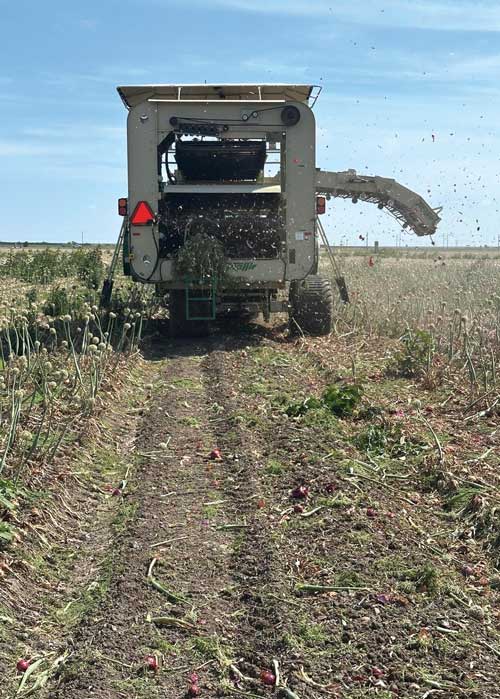
- Equipment staging: A Nicholson topping system arrived in Uvalde, Texas, in late June and is stored on site for the next harvest window. Another manufacturer exited mid‑season, so we adjusted our plan and confirmed new equipment timelines for the coming year.
- Field observations: We collected side‑by‑side damage checks during regular harvest. As operators dialed in settings from one day to the next, we saw fewer scuffs and cuts and generally no issues that would change a market decision. Those quick improvements told us that training and setup are as important as the hardware itself.
- Partnerships: Texas A&M AgriLife–Uvalde, South Texas Onion Committee and cooperating growers helped ground the work in real‑world conditions – from lighter sands to heavier loams – so we can map what settings work where.
What We’ve Learned So Far
- Machines reward consistency. Straighter beds and uniform crown height make harvester depth more forgiving and reduce scuffing.
- Not all onions handle the same. Varieties with tighter necks and stronger skins come through mechanical handling better. We’re shortlisting options that keep the TX1015 eating experience while holding up to the pass.
- Timing matters most. When necks are properly dried down, the same machine setting does gentler work. Simple in‑field checks – neck pinch and skin slip – help greenlight the entry.
- Gentle flow after lift pays off. A brief in‑windrow cure before shed intake reduces bruise signatures at grading.
What’s Next
With equipment staged and partners aligned, the next harvest window is set for full, integrated field trials: topper plus lifter/harvester, multiple field types and clear before/after comparisons in the shed. We’ll document the settings, the conditions and the outcomes so growers can see what’s repeatable and where adjustments make the biggest difference.
Why This Matters to the Industry
This isn’t about chasing a one‑size‑fits‑all machine. It’s about building a Texas‑specific playbook that improves predictability, protects quality and gives the industry confidence to invest. That includes opportunities for equipment engineers to refine designs with real feedback and for seed developers to prioritize traits that help onions travel the mechanical path without losing what makes Texas onions, Texas onions.