
Puncturevine (Tribulus terrestris L.) is a summer annual broadleaf weed species. It is also called “goat head” or “caltrop.” It thrives in dry and hot growing conditions. It causes significant problems in agricultural production areas, home landscapes and gardens, as well as roadsides, railway yards and waste places.
Puncturevine usually emerges after onions are established. The weed grows close to the ground and forms dense mats at the base of onion plants. It competes with onions for growth resources, produces seed burs that stick to tractor tires and interferes with harvest operations.
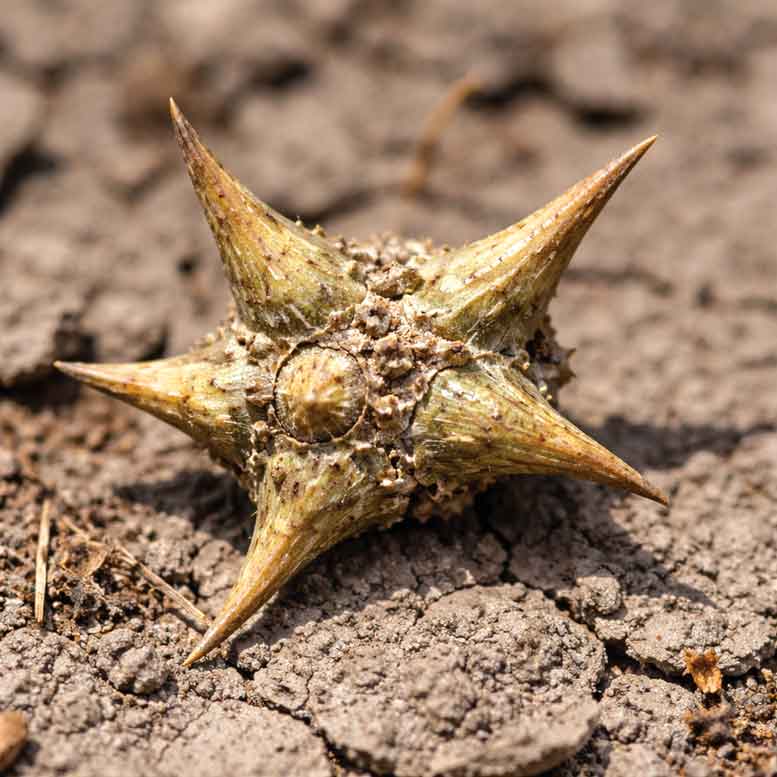
Puncturevine produces yellow flowers with five petals, about half an inch wide. The seedpods of puncturevine turn gray and spiky when mature. The seeds are contained inside the spiky seed pods. The seeds remain viable in the soil for up to five years. A puncturevine plant may produce 200 to 5,000 seeds during a growing season. Usually, the seeds remain dormant in the first season and germinate in the next. The spiky seedpods often stick to shoes, tires and animal fur.
Reducing the soil seedbank of puncturevine can help control this weed long term. This can be achieved by removing the plants before they produce flowers or seeds, hoeing the plants to remove the taproot and regularly monitoring the infested areas. Herbicides that can provide control over puncturevine include products containing oryzalin, benefin or trifluralin for pre-emergence control and 2,4-D, dicamba and glyphosate for post-emergence control. Please refer to herbicide labels for use.